

Bunk Beds - A Fun and Practical Way to Furnish Your Kid's Room
Bunk beds are an excellent option to furnish your child's space. They're both entertaining and practical. They're ideal for children who love to play games, make forts or use them as homework.
A few styles even feature shelves and desks that are built-in, which provide additional storage space. These types of furniture may cost more, but they are worth considering the convenience they can provide for your child.
1. Extra Space
While bunk beds are usually thought of as decor for children however, their potential to save space makes them a great option for a variety of rooms. They can be utilized to make small rooms appear larger, and are efficient storage and organization solution.
There are a variety of styles of bunk beds, so you should choose the one that is the most appropriate for your needs. Some designs have drawers as well as dressers for additional storage. Others are designed to maximize the space in your bedroom while offering plenty of sleeping space.
If you're looking for a bed that offers lots of storage, think about three-bunk beds that feature drawers beneath the bed. These beds can aid in getting rid of clutter in your child's bedroom and make it easier for them to keep the space clean.
Another option is hidden bunk beds that can be stored against the wall when not in use. They are an ideal option for small rooms, and they are often equipped with a desk that is kept in a corner when not in use.
They're an excellent choice for rooms that can do double-duty, such as a home office which could be turned into a guest room when guests come over. The bunks on the bottom extend from the wall, leaving a void beneath that can be used for an area for seating or an ideal platform for books and other decorative items.
Think about a bunk bed that has either a twin or full size mattress if you're looking for a way to provide your child with plenty of sleeping space. This will allow your child more room to stretch out and relax, and it will enable them to rest comfortably in their new bedroom.
2. Convenience
Bunk beds are an ideal method of creating extra space in your kids' room. Bunk beds are sturdy frames that can accommodate two or more bunks. They often have a ladder or stairs to access the top bunk. They also have guard rails to avoid falls and injury to sleepers.
The ability to convert bunk beds into two separate beds is an additional benefit. This is a great choice for those with kids who have lots of play equipment and toys in their rooms.
Bunk beds come in various styles and colors. They can be traditional with darker woods or intricate details or more contemporary with sleeker lines.
They are a great choice for families with a limited space, and are perfect for sleepovers that are cozy. They are also a great option for those who are living in dorms and short-term apartment and want to make more value from their living space.
When purchasing bunk beds, be sure you read the directions carefully. They will provide you with all the information you require about the bunk bed, including safety tips.
You can also ask the salesperson to help you choose a bunk bed that meets your family's needs and budget. This will help you save time and help you buy the best bed for your children.
When you have your bunk bed, be sure to teach your children how to safely and carefully climb the ladder. Avoid allowing your children to hang anything from the top bunk. This could cause strangulation or injury.
3. Fun for the kids
Bunk beds are an ideal space for children to imagine and play. With a bit of imagination, bunk beds could be their own private space where they can read and play games or relax.
One of the most enjoyable activities for kids is to build a bunk bed fort. By simply tucking a bedsheet over the top bunk, they can transform their room into a tent complete with fairy lights, pillows and a lot of fun imagination.
Slides can be installed to transform a bunk bed into an exciting play space. By placing a slide in the side of the bed children can easily slide down from the top bunk instead of climbing up the ladder. This is an excellent way to give kids a bit of fun while also saving time in the morning by allowing them to get down to the floor quickly and safely.
To avoid injuries and accidents be sure that children are well-informed on the rules of using the bed and ladders. For example, never let your children play roughhouse or bounce on the top bunk, or use a pillow or any other object to climb up onto it.
This will help protect the children from falling off of the top bunk, causing injury to themselves. This will protect your children from harm when they fall off the top bunk.
For extra security It is not recommended that you allow your child to sleep in the top bunk until they are at least six years old. This is because children who are too young to be responsible for climbing a ladder or playing in an elevated bed are more prone to falls, bumps and other accidents.
4. The best beds for sleepovers
Bunk beds are great for sleepovers since they provide an ideal space-saving solution as well as various designs. They are perfect for siblings sharing a bedroom, kids of various ages, college students at college, or anyone else who would like to share an area with family or friends.
They also save space in guest rooms when you have several kids coming over and don't want them to be in a single bed. Many kids enjoy sleeping in bunk beds during occasions like sleepovers. Some even prefer them to the twin bed.
When deciding on the best bunk bed for your child, take into consideration their age and the weight they can bear. The top bunk should be strong enough to handle heavier children or teenagers.
Consider also whether your children would like to make use of the top bunk for playing. This is a simple and enjoyable method of creating a fort, pirate ship, castle, or whatever your children can conjure up in their imaginations.
If your child has an exceptional need, such as a disability or a disability, a bunk bed that has safety features may be ideal for them. You can find bunk bed with stairs, or slides that let your child safely climb to the top bunk.
A strong and sturdy railing on the top bunk can help prevent both younger and older children from falling out of their beds. If your child is prone sleepwalking rails can be added to prevent them from rolling off the sides of the bed.
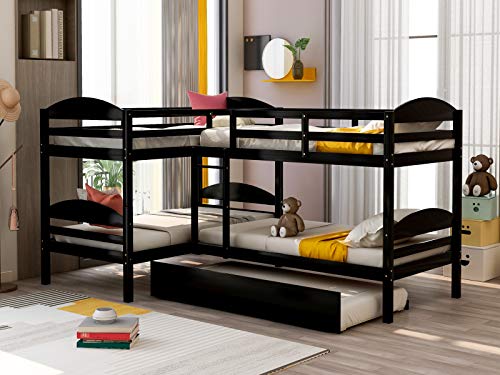
The ideal bunk bed for your children is one that will meet their needs and ensures a restful night's sleep to everyone. There are a variety of options, to ensure you find the perfect one for your kids.
5. Safety
Bunk beds are equipped with a variety of safety measures to ensure your kids are safe while they play and sleep. There are however, a few dangers that may lurk under the surface and cause serious injuries in the event of a mishap.
You should first check that the bunk bed that you purchase is compliant with all obligatory standards set by the safety commission of your country. These guidelines will cover all aspects of design and construction including the size of gaps and spaces inside the bed.
As well as making sure the bed is secure as well as checking it for strength. This is particularly important if your child will be sleeping on the top bunk.
It is possible to test it using a wedge-shaped block. It measures 3.5 6 inches by 3.5 inches and has a wedge tip with an attached hook at the bottom. If the wedge can fit into the gap between guardrail and the top of the mattress it is considered unsafe.
The next step is to educate your children on how to use the bunk bed safely. This includes letting them know that they should not sleep on the top bunk and teaching them how to use the ladder correctly.
Another crucial aspect is to keep your kids away from hanging objects, such as hangers for clothes or sports equipment like belts and skipping ropes because they can lead to strangulation. Make sure that your bed is secured by a bolt or latch that secures the upper bunk to the frame and is easily opened and closed.
The most frequent type of injury that involves bunk beds is falls. They are especially common in children who are young. This is because their bodies do not have a clear idea of the amount of space they have in relation to their beds yet. Research has proven that these children are 40 percent more likely than children of older ages to sustain brain injuries.